
A business owner has worked with the same vendor, contractor, partner, or client for years. The relationship began with a conversation and a handshake, and the arrangement kept working well enough that nobody felt much urgency to formalize it.
Then something changes. The vendor raises its prices, the partner remembers the ownership split differently, the contractor delivers work outside the expected scope, or the client disputes an invoice that was never backed by signed payment terms.
The trust may still be there, but now each side remembers a different agreement. What once felt simple and efficient becomes a dispute over terms that were never written down.
That is when a verbal agreement stops being convenient and starts becoming expensive. The parties may know that some agreement existed, yet proving exactly what it required can become the hardest part of the case.
Verbal Agreements Can Be Enforceable and Still Be Dangerous
California generally recognizes oral contracts when the ordinary requirements for contract formation are present. A handshake agreement for recurring services, for example, may create enforceable obligations even though the parties never signed a formal document.
The practical weakness is proof. Once the relationship breaks down, there may be no signed scope of work, payment schedule, termination clause, or other objective record showing what each side accepted.
The dispute can quickly become a credibility contest. Each party explains what they remember, while emails, text messages, invoices, payment records, prior performance, and witness testimony are used to reconstruct the arrangement.
That process is rarely clean. Two people can act in good faith and still remember a years-old conversation differently, especially when the agreement evolved through informal changes that were never documented.
The time available to bring a claim may also be shorter. California generally allows two years for an action based on a contract that was not founded on a written instrument, while an action based on a written contract is generally subject to a four-year period.
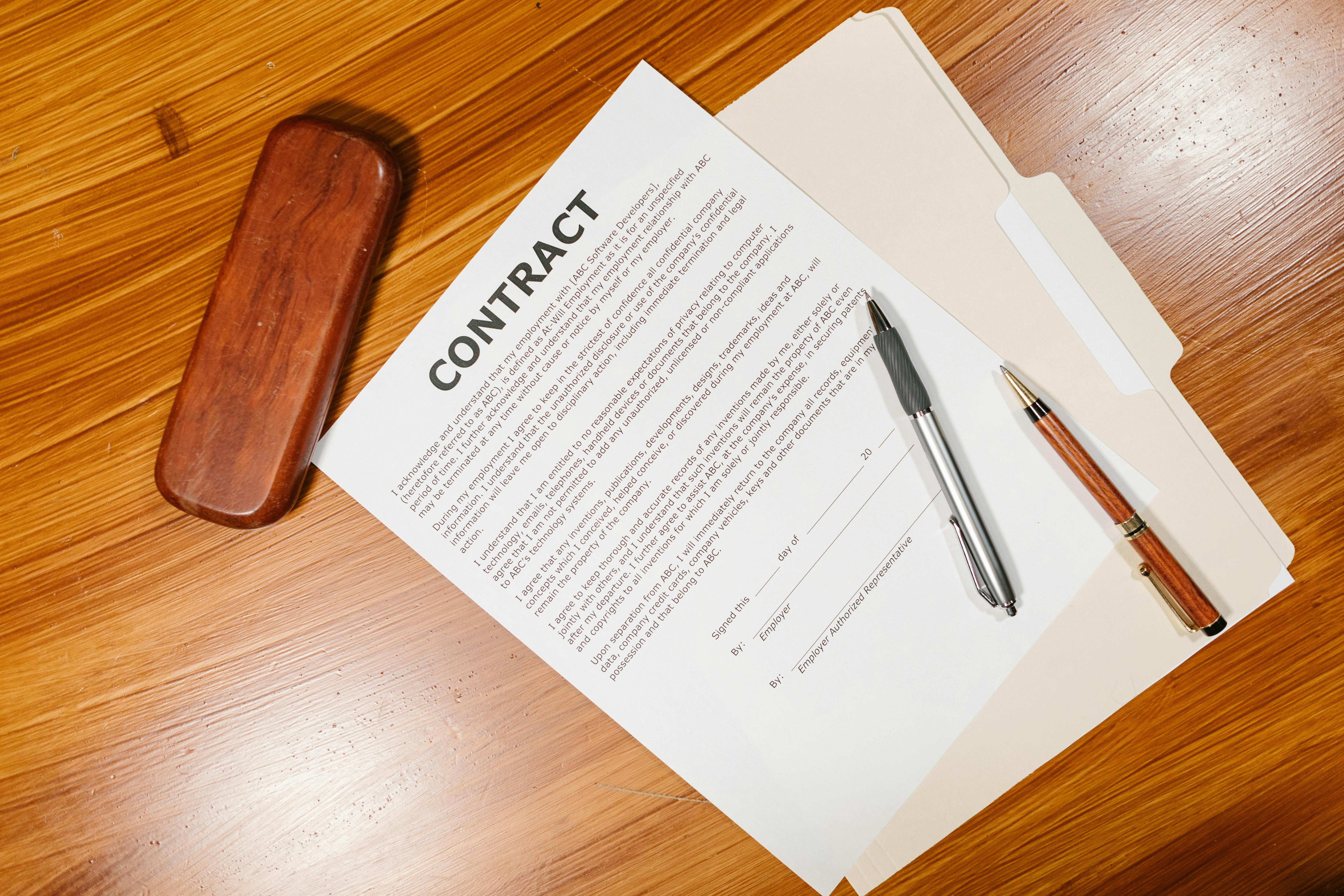
Some agreements also fall within rules requiring a writing. California’s Statute of Frauds applies to agreements that, by their terms, cannot be performed within one year, certain real estate agreements, and promises to answer for another person’s debt, among other categories.
Contracts for the sale of goods priced at $500 or more are generally subject to a separate writing requirement under the California Commercial Code. Exceptions can apply, but relying on an exception is a poor substitute for documenting the transaction correctly at the beginning.
What a Written Contract Protects
A written agreement does more than prove that the parties intended to work together. It records the details most likely to become disputed after expectations change or the relationship comes under financial pressure.
Scope of Work
A written scope defines what one party has agreed to deliver and what the other party must provide for that work to be completed. It can identify deliverables, deadlines, specifications, revision limits, approval procedures, and responsibilities that might otherwise remain vague.
Without that reference point, a contractor may believe the work is complete while the client believes an essential part of the project is missing. The disagreement begins with performance, then expands into an argument over what performance was ever promised.
Payment Terms
Informal business arrangements often identify a price without addressing the details around payment. The parties may never discuss the due date, deposits, reimbursable expenses, late charges, disputed invoices, or the conditions that must be satisfied before payment is owed.
Those details become much more important once money is late. A written contract gives both sides a common schedule and can establish a process for raising and resolving billing disputes before they threaten the entire relationship.
Termination Provisions
Every business relationship eventually ends, even when the work has gone well. A contract can explain how either party may terminate, how much notice is required, what payments remain due, and which duties continue after the relationship ends.
Without that language, the attempted exit can create a new dispute. One party may believe the arrangement ended immediately, while the other expects additional notice, payment, or completion of unfinished work.
Dispute Resolution
A written agreement can establish how disagreements will be handled before either side is angry enough to file a lawsuit. Depending on the transaction, the parties may agree to negotiation, mediation, arbitration, or litigation and identify the law and forum that will govern.

No single process fits every business relationship. Choosing the process in advance still gives the parties more control than leaving those questions unanswered until a dispute has already escalated.
Intellectual Property Ownership
Businesses regularly pay for designs, software, photographs, written materials, branding, technical work, and other assets without clearly addressing ownership. Payment alone does not always answer whether the client receives full ownership, a limited license, or only the physical or digital deliverable.
A written assignment or license provision can state who owns the work product and what each party may do with it. Without that language, the default rules may produce an answer neither side expected.
Which Business Relationships Need Written Agreements
Nearly every ongoing or financially meaningful business relationship benefits from a written contract. The need becomes especially urgent when the relationship involves shared ownership, recurring payments, valuable work product, or obligations that will continue for months or years.
Partnerships and Joint Ventures
Co-owners need documented answers about ownership percentages, capital contributions, profit allocations, management authority, and decision-making rights. They also need to know what happens when someone wants to leave, stops contributing, becomes unable to participate, or wants to sell an interest.
A friendship or shared business vision cannot resolve those questions once the owners are in conflict. The absence of an agreement can allow a disagreement between two people to destabilize the entire company.
Vendor and Supplier Agreements
Vendor relationships need clear terms covering pricing, delivery schedules, quality standards, inspection rights, and responsibility for defective or late goods. These provisions give the purchasing business a way to measure performance and identify a remedy when the vendor fails to meet the agreed standard.
A late or defective delivery is already an operational problem. When the underlying obligation was never documented, the business may also struggle to prove what the vendor was required to do.
Client Service Agreements
A service agreement should define what the business will provide, when it will provide it, what the client must contribute, and how much the client will pay. It can also address revisions, delays caused by the client, acceptance of completed work, and services that fall outside the original scope.
Clear scope language prevents many disputes before they begin. It gives the provider a boundary around the engagement and gives the client a concrete description of what the fee is purchasing.
Employment and Independent Contractor Agreements
Written agreements can help define duties, compensation, confidentiality, intellectual property rights, and expectations surrounding termination. They are particularly important when a business intends to engage someone as an independent contractor rather than an employee.
The label in the agreement does not control worker classification by itself. California also looks at the applicable legal test and the way the relationship functions in practice, so the contract needs to reflect an arrangement that is structured and operated consistently with the law.
What Happens When an Informal Agreement Falls Apart
A dispute based on a written contract usually begins with the document. The attorneys can identify the obligations, compare them with what occurred, and evaluate whether either party failed to perform.
A contract dispute attorney San Diego businesses contact after a verbal deal collapses may have to begin much earlier in the analysis. Before addressing the alleged breach, counsel may need to establish that a contract existed and prove its material terms.
That reconstruction can involve years of emails, scattered text messages, inconsistent invoices, bank records, internal notes, and testimony from people who remember the same conversations differently. Even a strong claim can become more expensive when the first stage of the case is devoted to determining what the agreement actually was.
The added uncertainty affects both litigation and settlement. A party with a clear written provision can negotiate around defined rights, while parties relying on competing memories have to account for the risk that a judge or jury will believe the other version.
Those legal expenses may exceed what it would have cost to draft the agreement before work began. Preventive contract work cannot eliminate every disagreement, but it can keep an ordinary disagreement from turning into a dispute over the basic existence and meaning of the deal.
Protecting Business Relationships Before They Break Down
Putting an agreement in writing is not an accusation that the other party cannot be trusted. It protects the relationship by making sure everyone starts from the same understanding and knows what will happen if circumstances change.
Villasenor Law Offices drafts, negotiates, and reviews business contracts for San Diego companies. The firm also assists businesses when an existing contract relationship has already broken down and the parties need to evaluate their rights, obligations, and available remedies.
The best time to clarify a business arrangement is while the parties are still cooperative. At that stage, unclear terms can be discussed openly and resolved without the pressure that comes after money has been withheld, work has stopped, or one side has threatened legal action.
Businesses that rely entirely on handshakes are not necessarily avoiding legal expense. They may be postponing it until the missing contract has made the disagreement harder and more expensive to resolve.
If an important business relationship is still operating through conversations, old emails, or assumptions, Villasenor Law Offices can help put the arrangement on a firmer foundation. A conversation now is usually far more manageable than a lawsuit later.
Villasenor Law Offices
+18587077771
12396 World Trade Dr Suite 211, San Diego, CA 92128