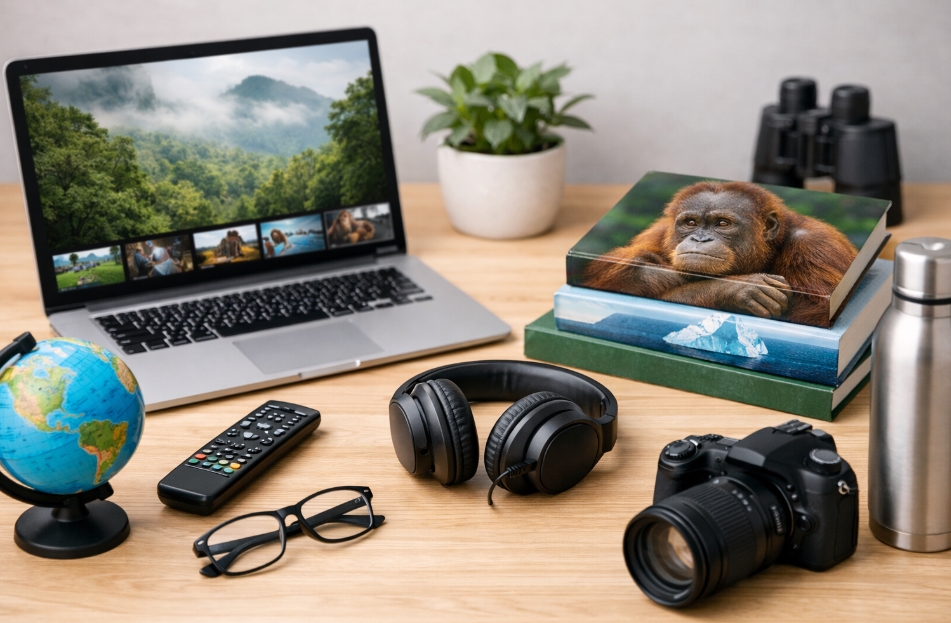
There’s a particular kind of silence that fills a room when a documentary ends and nobody moves. The credits roll, the screen dims, and everyone just sits there, processing. Environmental documentaries have a way of doing that. They show us places we may never visit, animals we may never see, and changes happening so gradually or so far away that we might otherwise never notice. Then they ask the uncomfortable question: now that you know, what are you going to do?
The best conservation documentaries don’t just terrify you with statistics or drown you in guilt. They tell stories. They introduce you to people who have dedicated their lives to protecting a single species, a patch of forest, a stretch of ocean. They show you beauty so staggering it makes your chest ache, then explain quietly what’s at stake. They leave you informed, moved, and, if they’re really good, weirdly hopeful.
Here are some of the finest documentaries on environmental conservation, spanning decades of filmmaking and covering every corner of the planet.
The Classic That Changed Everything: Planet Earth (2006)
It feels almost unfair to start here, because Planet Earth redefined what nature documentaries could be. Produced by the BBC Natural History Unit and narrated with gravitas by David Attenborough, the eleven-episode series was filmed over four years across sixty-two countries. It gave us sequences that had never been captured before: a snow leopard hunting on a sheer mountain face in the Himalayas, a great white shark breaching to catch a seal in super slow motion, the massive flocks of migrating birds viewed from above.
The series wasn’t explicitly about conservation. It was about showing the planet in all its staggering variety. But that act of showing was, in itself, an argument for protecting it. When you see a bird of paradise performing its absurd, beautiful mating dance in a remote New Guinea forest, the idea that such a creature’s habitat could be logged into oblivion feels like a specific kind of crime. Planet Earth made the world feel immense and fragile at the same time. The 2016 sequel, Planet Earth II, updated the visual language with better technology and a more explicit conservation message. Both are essential.
Where to watch: BBC iPlayer, Discovery+, various streaming rental platforms.
The One That Looks at the Ocean Differently: Blue Planet II (2017)
The original Blue Planet in 2001 was already a masterpiece. The sequel, released sixteen years later, took underwater cinematography to a level that still feels almost unbelievable. Camera teams spent over six thousand hours diving, filming in every ocean, using specialized rigs that could keep pace with dolphins and suction cameras that hitched rides on whales.
But Blue Planet II will be remembered for more than its beauty. The final episode, focusing on the impact of plastic pollution on marine life, sparked a global conversation. Footage of an albatross feeding its chick a plastic bag, of a sea turtle tangled in a discarded net, of microplastics drifting in ocean currents, shifted consumer behavior and corporate policy in ways that documentaries rarely achieve. It wasn’t preachy. It just showed what was happening. The images did the rest.
Where to watch: BBC iPlayer, Discovery+, various streaming rental platforms.
The Uncomfortable Truth Told Beautifully: Our Planet (2019)
Netflix poured substantial resources into Our Planet, hiring the same top-tier wildlife filmmakers who made Planet Earth and pairing them with Attenborough’s narration. The result is visually on par with the BBC’s best work, but with a sharper conservation edge. Each episode examines a different habitat, from frozen worlds to jungles to coastal seas, and explicitly connects the majesty on screen to the threats those ecosystems face.
A sequence in the second episode showing walruses falling to their deaths from steep cliffs, driven there by shrinking sea ice that forced them to crowd onto land instead of resting on ice floes, became one of the most discussed and heartbreaking conservation images in recent documentary history. Our Planet doesn’t let you just admire the beauty. It insists you understand its fragility.
Where to watch: Netflix.
The One That Started the Modern Climate Conversation: An Inconvenient Truth (2006)
It’s easy to forget how different the conversation was before this film. Al Gore’s slide-show presentation on climate change, delivered in front of massive screens projecting stark graphs and retreating glaciers, was originally just a talk he gave to small groups. When directors Davis Guggenheim and Lawrence Bender turned it into a documentary, it became a cultural phenomenon.
Watching it now, the style feels dated, the PowerPoint transitions quaint. But its impact was real. An Inconvenient Truth brought climate science into mainstream conversation in a way nothing had before. It won two Academy Awards. It was shown in classrooms across the world. The follow-up, An Inconvenient Sequel: Truth to Power (2017), follows Gore’s continued advocacy and the political shifts of the intervening decade, including the Paris Agreement negotiations.
Where to watch: Paramount+, various streaming rental platforms.
The Quiet, Personal Story: My Octopus Teacher (2020)
This film is different from everything else on the list. There are no sweeping helicopter shots of migrating herds. No global statistics. No call to political action. Instead, a South African filmmaker named Craig Foster, burned out and struggling with depression, begins free-diving in a cold underwater kelp forest near his home. There, he encounters a small octopus. Over months, he visits her every day, earning her trust and documenting her life.
What emerges is an intimate portrait of a single animal. She plays with fish. She evades a pajama shark through astonishing creative tactics. She stretches out a tentacle to touch Foster’s hand. The relationship that develops between a man and a wild cephalopod becomes a meditation on connection, on paying deep attention to the natural world, and on what nature gives back when you spend time with it. The film is a quiet masterpiece, and it will change how you think about animal intelligence and the emotional depth of creatures we barely understand.
Where to watch: Netflix.
The One About Agriculture Done Differently: Kiss the Ground (2020)
Narrated by Woody Harrelson, Kiss the Ground shifts the conservation lens from pristine wilderness to the soil under our feet. Its central argument is both simple and radical: regenerative agriculture, farming practices that rebuild healthy soil, can sequester enough carbon to meaningfully address climate change while restoring ecosystems and improving food quality.
The documentary avoids the doom-and-gloom framing of many environmental films. Instead, it focuses on solutions, highlighting farmers, scientists, and activists who are already implementing practices like no-till farming, cover cropping, and managed grazing. The tone is optimistic and pragmatic. The film makes a compelling case that the way we grow food is both a major cause of environmental degradation and one of the most powerful levers we have to reverse it. It’s the rare documentary that leaves you feeling genuinely empowered rather than helpless.
Where to watch: Netflix.
The One That Investigates the Ocean’s Collapse: Seaspiracy (2021)
Seaspiracy is a difficult watch, and it’s meant to be. Director Ali Tabrizi sets out to investigate the environmental impact of the global fishing industry, and what he finds is grim. Plastic straws, the film argues, are a distraction. The real threat to marine life is industrial fishing, bycatch, and the vast, largely unregulated exploitation of the oceans.
The film generated significant controversy upon release, with some scientists and conservation groups challenging specific statistics and conclusions. Whether you accept every claim or not, Seaspiracy undeniably drives the conversation toward issues that receive far less attention than plastic pollution. It asks uncomfortable questions about the labeling and sourcing of seafood, the impact of fishing subsidies, and the human rights abuses tied to the fishing industry. It’s a film that wants to provoke, and it succeeds.
Where to watch: Netflix.
The One About the Man Who Warned Us: David Attenborough: A Life on Our Planet (2020)
Attenborough has been making nature documentaries for over six decades. He’s seen more of the natural world than almost any human who has ever lived. This film is his witness statement, a reflective, deeply personal look at what he’s observed over his lifetime and what he fears for the future.
The film opens in the ruins of Chernobyl, a haunting visual metaphor for a world that could become uninhabitable. It then traces Attenborough’s career, pairing archival footage with modern reflections. The planet he began filming in the 1950s is not the planet we live on now. The decline he documents is not theoretical. It’s something he’s watched through his own eyes. But the final act shifts to solutions. Rewilding. Renewable energy. Stabilizing the human population through education and empowerment of women. It’s a film that balances grief with a clear-eyed, hard-won hope rooted in a lifetime of observing nature’s resilience.
Where to watch: Netflix.
The One That Highlights Heroes: Chasing Coral (2017)
Coral reefs are among the most biodiverse ecosystems on Earth, and they are dying at an alarming rate. Chasing Coral, from the team behind Chasing Ice, follows a group of scientists, divers, and photographers as they document the third global coral bleaching event. Their mission is to capture time-lapse evidence of bleaching happening in real time, a technical challenge that requires inventing new underwater camera rigs and placing them on reefs around the world.
The footage they capture, showing vibrant, colorful reefs turning ghostly white and then dying within weeks, is devastating. But the film is also a portrait of the people who have dedicated their lives to studying and protecting these ecosystems. Their passion and persistence become the emotional anchor. You care about the coral because you can see how much they care. It’s a film about loss, but it’s also about the people who refuse to look away.
Where to watch: Netflix.
The Short Film That Stays With You: The Elephant Whisperer (2023)
This shorter documentary tells the story of Lek Chailert, a Thai woman who has dedicated her life to rescuing and rehabilitating abused elephants. Her sanctuary in northern Thailand is a place where elephants that have been used for logging, street begging, or circus performances learn to trust humans again. The film is gentle but unflinching about the cruelty these animals have endured, and the relationship between Lek and the elephants in her care is genuinely moving. It’s a reminder that conservation isn’t just about preserving species in the abstract. It’s about individual animals, individual acts of care, and the people who devote their lives to making things right.
Where to watch: Various streaming platforms, check availability in your region.
A Few Honorable Mentions
The list could go on forever, but a few more deserve your attention. Virunga (2014) follows park rangers protecting the last mountain gorillas in a war-torn corner of the Democratic Republic of Congo. The Cove (2009) is a thriller-like exposé of dolphin hunting in Japan that remains shocking years later. Before the Flood (2016), produced by Leonardo DiCaprio, is a comprehensive, accessible overview of climate change and its solutions. Racing Extinction (2015) from the Chasing Coral team uses hidden cameras and clever visuals to expose the wildlife trafficking trade and the ongoing mass extinction.
The Bottom Line
Documentaries about environmental conservation walk a delicate line. Show too much beauty, and the threat feels distant. Show too much devastation, and the audience shuts down in self-defense. The best of them find the balance. They show you what exists and what’s at risk. They introduce you to people who haven’t given up. They give you reasons to care that are specific and personal, not abstract and overwhelming.
A good conservation documentary doesn’t leave you feeling guilty. It leaves you feeling connected. To a kelp forest in South Africa. To a coral reef in the Pacific. To a patch of soil on a farm in California. Connection is the precursor to action. Before you protect something, you have to love it. And before you love it, you have to see it clearly. These films let you see.